
I recently asked some of my Milan Design Week comrades what the best part of the festival was for them. Samuel Wilkinson, designer of the Plumen, (did I mention that I met him?!), said: “Like most years, Spazio Rossana Orlandi – such a nice way to enjoy design after spending days at the Feira” and I couldn’t agree more. It has a buzzy cafe atmosphere and a lovely outdoor space where you could sit and enjoy an espresso in the sun while you took in the incredible selection of new design all around you.

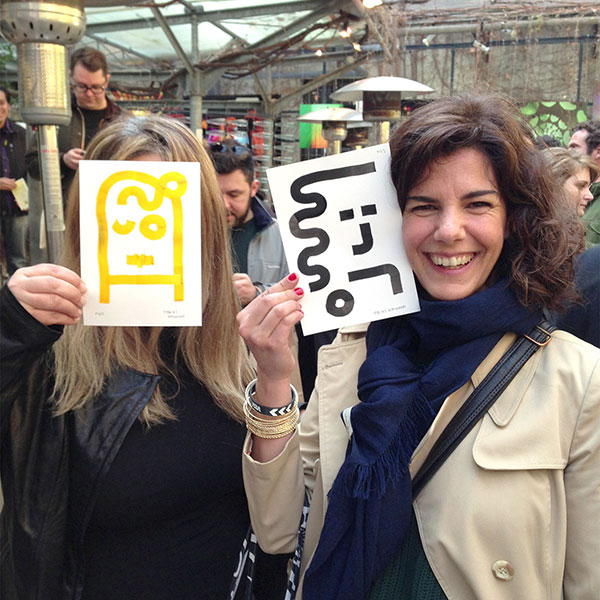
The first thing I noticed and definitely one of my highlights from the festival was Tobias Gutmann’s Face-o-mat. You sit on one side, feed a special Face-o-mat currency $5 bill through the slot, adjust the dials and wait. Meanwhile on the other side, Tobias paints your portrait, using images of various design icons as reference material to give you a ‘facelift’ and feeds your finished portrait back through a slot to you.

The results were fabulous and very soon a long queue had formed for one of these quirky masterpieces.

Face-o-mat was part of Konstfack’s Design Anima, an attempt “to reach the unconscious soul of the design – the Anima” as was Mass-Produced Individualism by Iina Vuorivirta – I’ve seem similar designs before, but I never tire of work that shows its making process like this – there’s a certain honesty about it that really appeals to me.

Just across from here was What Not, the School of the Art Institute of Chicago’s presence at Milan – I’d heard good things about their stand last year, so I was excited to see them and meet some of the students. I had two favourites…

New Rule, by Allon Libermann, mimics the way we count measurements along rulers with our fingers – I love design that is driven by little insights like this – things we barely notice we’re doing until someone points it out.

And I also loved A Moment by Jay Hyun Kim’s 55-minute – a timer which reveals different colors as it unfolds.

Curro Claret’s T300 is a single piece of metal that enables the user to make their own stool from found materials. The project started through an initiative to help people at risk of social exclusion to make their own furniture and has since expanded to include many people in difficult situations.

This is the first time the crucial metal piece has been available for sale. I love the democracy of design in this idea and the unlimited possibilities for resulting stools.

Finally, Scholten and Baijings’ display for Hay was simply beautiful. I absolutely love their pale neon colour palette and geometric designs – I hope they never fall out of favour. Incorporating catalogues into this relatively small display space was a really clever way to display larger items too, I thought.

And here is a short film, courtesy of Crane TV including an interview with the lady herself…
Further reading for the especially geeky:
- out and about :: milan 2013
- out and about :: ventura lambrate
- out and about :: salonesatellite
- out and about :: milan design week preview