
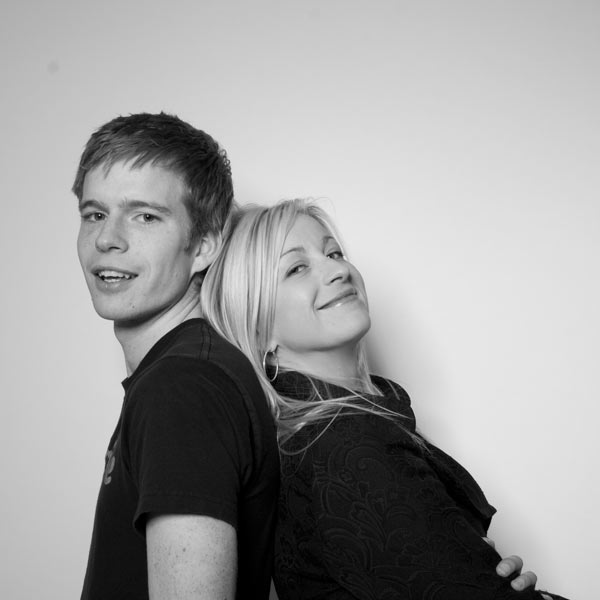

I don’t know if you remember the BBC 2 series Design for Life with Philippe Starck – it was essentially X-Factor for design geeks and I was hooked. So you can imagine my delight to meet the eventual winner and my favourite contestant Ilsa Parry at this year’s Pulse.
I admired not only her skill in design but also her integrity – developing a product that could really help the elderly people she’d worked with in the past, and speaking up to save a fellow contestant from being booted out in episode 2, even though that lessened the chances of her own success.

I am therefore very excited to be able to share with the whole design and making process of the product she won with – the Flo stick, which despite the show airing three years ago, has only just reached the stage where distribution can begin.
Ilsa worked for seven years as a care assistant in various nursing homes and hospitals and saw the emotional struggles faced by those who have to depend on others for help with daily tasks. She was also raised in part by two elderly ladies and so felt a strong desire to give something back to their generation.

When she started designing, people with difficulty standing up from a chair either had to accept help, reducing their independence, or use existing products most of which were based on a stick with a tripod base. These presented difficulties – the person had to use their arm to take their weight, often knocking their shoulder out, and sometimes needed additional support so had to lean on the seat between their legs, making the whole process quite undignified. Ilsa felt there must be a better way – a way to help people stand that neither robbed them of their independence or their dignity.
Ilsa’s idea was to create a stick that the person stood into, so that it supported their legs as they stood. This stick would not only help them to stand, but then double up as a walking stick once they were up.

Ilsa described her first sketch as “a bit mechanic.” In response to Starck’s feedback to “keep it simple, use less less less and get to the point,” she set about trying to make it more human and more discrete by working out the bare minimum form she could get away with to deliver the functionality she needed. She started creating models using wire and masking tape taped onto her own leg.

Having sketched out a form, she worked with Starck’s model maker to hand sculpt a thicker polyurethane foam model (above right) The foot plate initially came around the back of the heel so that the stick could be free standing – dropped walking sticks are a constant cause of frustration for the elderly – however in testing, people were struggling to unhook their feet and the plate was digging in too much to the calf area.

The second model (above) shown during the final episode of the show simplified the foot of the stick and was slimmed down to reduce the amount of material required in its production. This did mean it lost its second function as a walking stick and would just be used to get out of chairs.
After the show, Ilsa set about experimenting and modeling with anything she could get her hands on from wood to foam, with the ambition of reintroducing the double functionality. A version with a two-pronged foot was successful as a walking stick, but people were tripping on the foot when using it as a standing aid.

A big breakthrough came when Ilsa negotiated a contra deal with Unilever – she would provide design consultancy for their team in exchange for being able to develop prototypes at their R&D facility in the Wirral. Using ABS, fuse deposition modeling and 3D printing from CAD models she developed a series of prototypes – a break from Design for Life where they hadn’t even been given access to computers until the last four weeks of filming. (Just to translate some of those terms(!) ABS is a hard plastic used usually in phone casings (it stands for acrylonitrilebutadyenestyrene) and fuse deposition modelling is a way of making a 3D object by building in layers ¼ mm at a time (rapid prototyping), which uses the same technology as an inkjet printer.)

Next, she won a £3,000 innovation grant from the North West Development Agency and worked with Manchester University to carry out strain analysis (above) which determined the required thickness for the carbon fibre she hoped to make the final product from. At this point the programme was only just about to air.

John Moore University assisted with the finances to gain patent protection as Ilsa was making final adjustments to the foot. Having got the form right the next step was to confirm the materials. She decided to use a silicon mould to cast replaceable polyurethane plastic feet for low volume prototype production.
She then worked with Manchester University to make the first carbon fibre flo stick. A central core was made using 3D printing in three parts. This was wrapped in wet carbon fabric soaked in resin, and vacuum formed around the central core before being left to dry.
Having got the fundamentals sorted, things like logo design could be refined.

Ilsa used money saved from consultancy and commissioned projects to work with a manufacturer in Scotland who made a fiberglass mould enabling the carbon structure to be recreated without needing the ABS core used by Manchester Univeristy in the initial prototyping stages. It used the same technology as carbon bike making – they even found a way to get the bladder bag out of the centre (it’s bladder moulded, formed by inflating a bag with water inside to push it out to the edges of a female mould) which further reduces weight and isn’t possible on bicycles.

Finally, the flo stick is ready for production and Ilsa is in talks with distributors and taking orders.
I had assumed the flo stick was good to go at the end of the show, and was really interested to discover how much more complicated it is than that. I really admire Ilsa’s tenacity and proactivity in seeking funding, grants and access to prototyping facilities in order to get the flow stick into production.
Designing for old people isn’t sexy and it’s not going to get you into many design magazines, but design is about making people lives better, about identifying problems that cause suffering, large or small, and solving them with something beautiful – I think this product is a wonderful example of exactly that.

Further reading for the especially geeky:



I was also hooked on that programme when it aired. Didn’t quite agree with the pretence that there was no good design coming out of the UK, but it was a very interesting programme nonetheless. Great article Katie!
I never saw the programme:( what a shame. Sounds fascinating.
Yes, it might not be sexy to design products for the elderly but it’s definitely more purposeful.
Great post.
I was totally hooked on that programme. I think it gave a genuine insight into the design process and made people think twice about it. Thanks so much for putting this up, I often wondered what happened after. Can we have a follow up post soon too?
Becky
x
Only just getting around nowto reading this post! I LOVED that programme. Great post xx
I loved the programme ….. brilliant product, she’s smart, an inspiring design idea, it really meant something to her…. Practical and looks so organic. Excellent article