
Despite being one of the biggest consumer goods fairs in the world, Ambiente Frankfurt has so far eluded me, so I was over the moon to make my first trip there last weekend. Between Ambiente Talent, Next, Design Plus and the German Design Award, the investment in new talent is significant, so I had my work cut out. Here are a few of the things that caught my eye – starting with Corn by Ondrej Strnadel, part of Slow! Glass!, an exhibition of handblown glass made using traditional techniques in the Czech Republic.

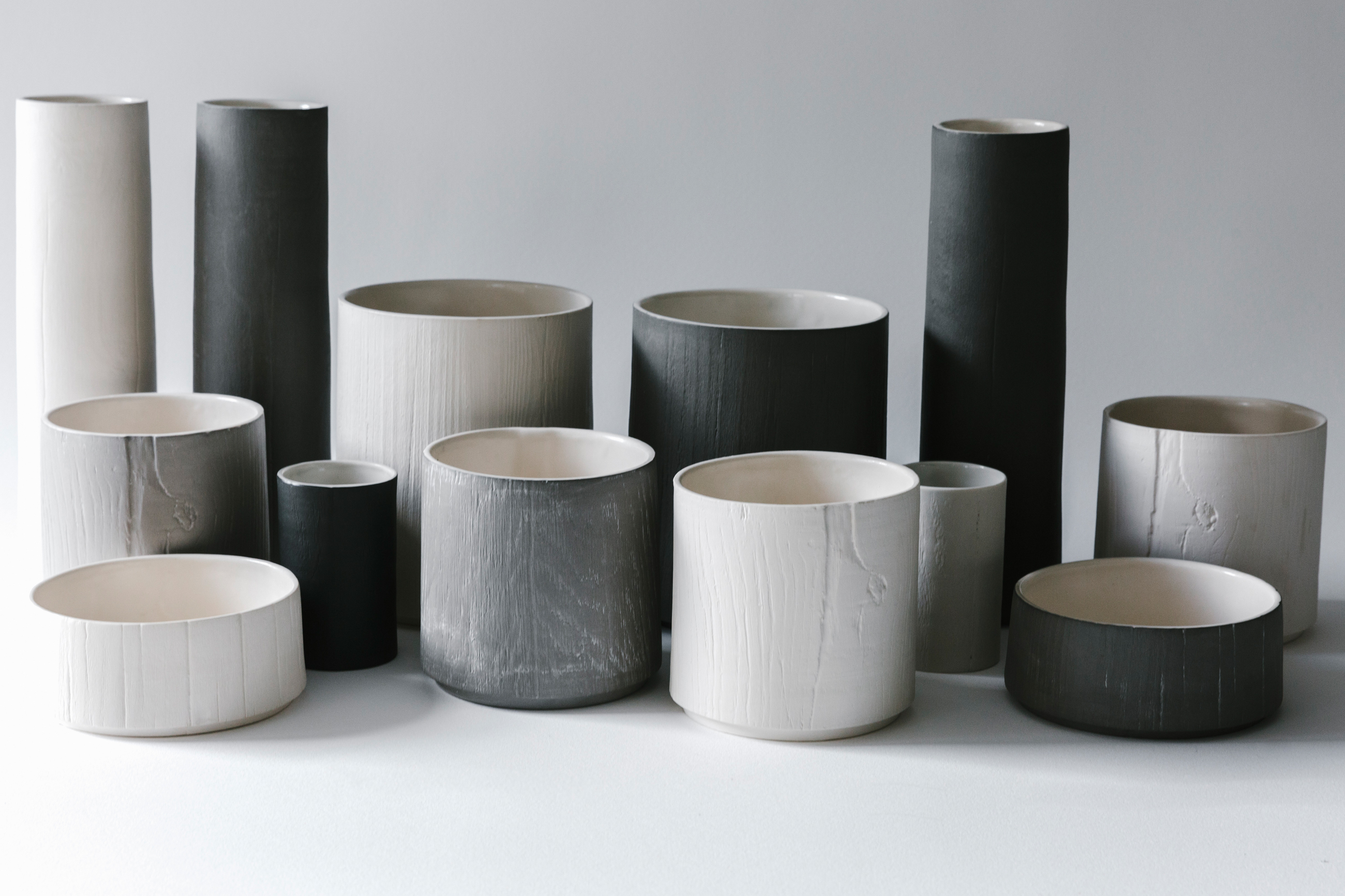
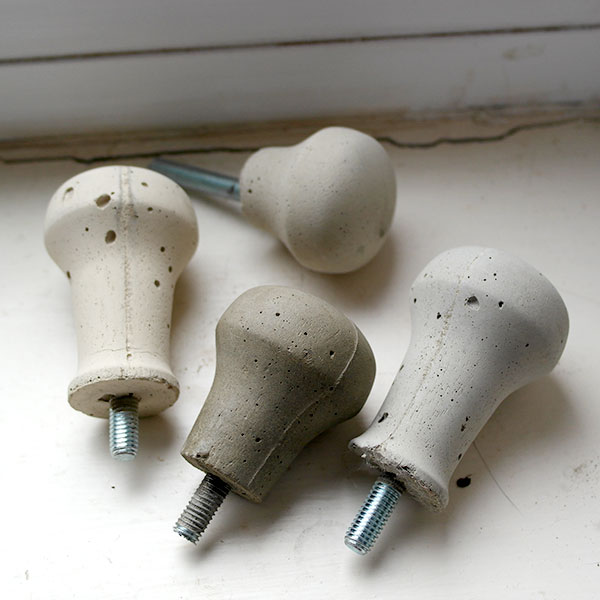
There’s a lot of work around at the moment attempting to blur the lines between craft and mass production. Robin Hohn’s Diversity of Mass Production collection is one example – made in two-part moulds, every one is different. “The charm of traditional craftsmanship is combined with the advantages of modern manufacturing processes making it possible to generate and to discover future production methods,” he said.

Another trend I’m starting to see this year is one of embracing imperfection. The Japanese call this Wabi-sabi, sometimes described as the beauty of the “imperfect, impermanent, and incomplete.” German studio Moij Design’s Origami tableware is made from paper origami moulds doused in plaster, so every crease in the paper is reflected in the final piece. The designers are Academy of Fine Arts Hamburg graduates Stine Paeper and Angelina Erhorn.

I absolutely loved Basket Case II, a collaboration between designers and basket weaving communities in Zimbabwe. French designer Matali Crasset worked with a basket-making community of women in Bulawayo to design and make the Gourd Family. She took a form they were already familiar with, the gourd, and used it in different ways to give their work a unique identity – crucial if it was to stand out at Ambiente.

8groschenKNABEN by German design Alexander Spenst is a collection of five tea caddy prototypes. Spenst used the design process as an investigation into colour and form, eventually settling on their characterful spinning top design.

Ridge Kitchen, by New York based Visibility, is a collection of porcelain tools for the kitchen, decorated with a functional pattern – the grooves on the mortar and pestle aid the twisting motion required for grinding, the grater is designed for ginger and garlic, modelled on traditional Japanese porcelain graters, and the indentations of the pitcher eliminate the need for a handle.

Stuttgart-born Friedemann Bühler’s incredibly delicate vessels, bowls, and translucent lampshades are made by hand-turning whole sections of wet wood – usually oak, maple, ash, walnut, wild service tree, hornbeam and birch, sourced from the forests of Hohenlohe, a small region in the northern part of Baden-Württemberg. They are incredible.

I discovered (and fell in love with) Prague-based design studio Dechem at Designblok in their home city, so it was lovely to see them again in Frankfurt. Bandaska Lamp is part of their Laboratory Lights collection. The lamps are hand-blown into beech moulds from smoke grey, crystal clear or coloured gradient glass, with copper coated metal parts, an Edison bulb, and textile coated wire.

I loved Lilla by second year design student, Jessica Herrera. Responding to shrinking multifunctional living spaces, the prototype enables both dining and working, with storage space inside for whichever you’re not currently using it for.

ZZ Design Studio’s Ostrich side-table made me smile! The light – its head and neck – is only attached by magnets, so can be attached to any part of the bird’s ‘body’. The desk is made of iron, while the legs and ‘neck’ are American ash. Designed to be put next to a sofa or chair, designer Mario Tsai hopes it will inject some fun back into reading. It is available in black, orange and blue.

Light by Tokyo-based studio Yoy is another charming piece of design. Available as a floor lamp and a table lamp, when switched on, an LED inside the head of the aluminium pole projects the shape of a lightshade onto the wall behind the light.

I loved Indian artist and designer Valay Gada’s work. He founded Cobalt Designs in 2012 with the aim of combining artisanal fine craftsmanship with contemporary design. His brass and copper beakers and coasters fuse traditional hand-applied patination with delightfully geeky references such as pie-charts.

A diabetic since childhood, Carlos Alves Ludovico spent many a birthday party feeling his was missing out. His Fruit On Top cake emphasises the importance of healthy eating, elevating fruit to the status of the “cherry on top.” The height of each slice indicates the carbohydrate value of each type of fruit, to help those keeping an eye on their blood glucose levels make the right choices.

Concerned about how distracted we’re becoming by social media, Berlin-based designer Weng Xinyu designed the Balance Lamp. It only switches on when the counter-weight of a smartphone lifts the light source off the surface of the desk, illuminating the user’s working space and allowing them to fully concentrate on the task in hand.

And finally, it was so lovely to see 2015 confessions of a design geek bursary winner, Alicja Patanowska in Ambiente Talent and hear about all the wonderful opportunities that have come her way since winning the bursary. Alicja trawls the streets of London in the early hours of the morning collecting discarded glasses and then hand-throws ceramic forms that turn them into unique plant pots.
Further reading for the especially geeky:
- out and about :: greenhouse, sff15
- out and about :: northmodern
- coadgbursary :: home london, jan15
- out and about :: desso best in class winner
Ambiente Frankfurt is one of four shows we’re covering for Issue 2 of Fiera Magazine, so keep your eyes peeled for lots more new design talent – preorder your copy of Issue 2 now.