

In this week’s column for confessions of a design geek, Maya Alvarado shares another day in her life as Fixperts Resident at British furniture manufacturer Benchmark – this week she finishes her first fix, finds a fix for a broken fridge door handle, continues work on reorganising Benchmark’s samples system…
06:45: I wake up, take a hot shower and eat breakfast.
07:40: I make my way to Benchmark. It is lovely seeing the canal community each morning, they are up so early and already getting things done!

08:30: Today, I decide to begin a full investigation into the samples system here at Benchmark and see what adjustments can be made. Craig from the metal workshop (who I was making the rack for) comes to grab me to finish making the frame. I had been waiting for his availability to get down the seven metre lengths of 50 by 50 millimetre steel before I could complete the project. I am getting stronger in my time here, but not quite strong enough yet to get those lengths down! I use the metal chop saw to cut the parts and weld them into place. I had done a bit of welding before whilst studying in Kingston and on my Erasmus exchange in Germany, but never so much independently. It is pretty hard work and quite exhausting concentrating on something in that way for so long.
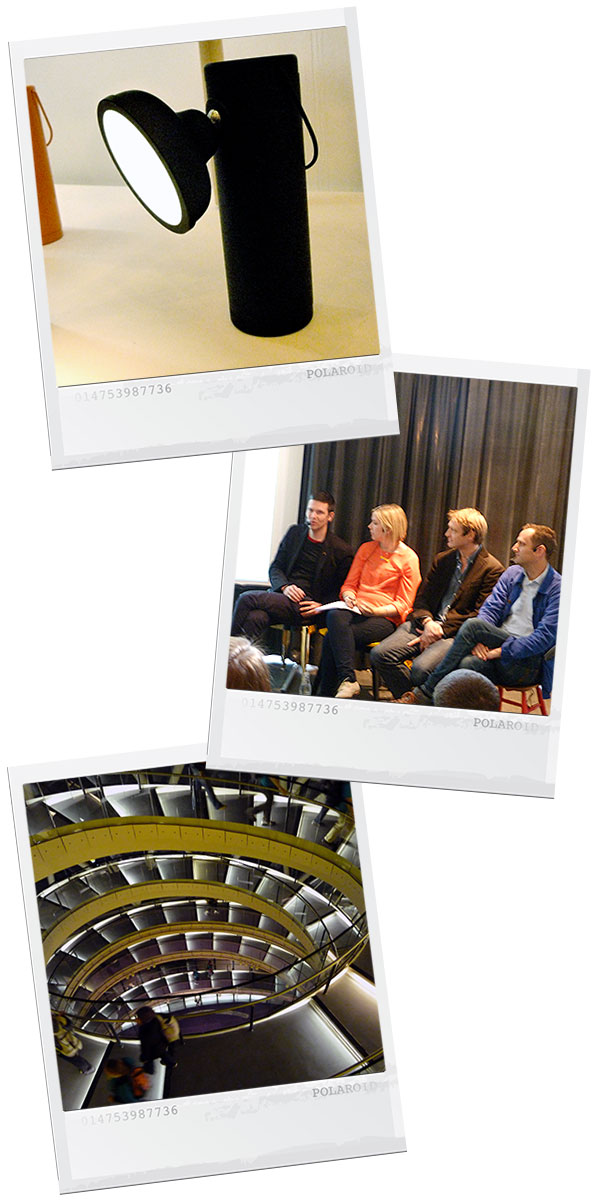
10:00: Break time – tea and toast. I chat to some of the team about my weekend. I was manning the Fixperts stand at the V&A’s Digital Design Weekend. This was a chance for people to watch Fixperts films, hear about the residency programme and partake in a design workshop where children and parents mapped their daily activities and stated the level of difficulty for each. It was great to see the children considering design solutions by sketching and model making. Mireya, the Venezuelan carer of 89-year old Mrs Ellis, also came to visit me at the V&A. It was great to tell her more about Fixperts through the films and material on display.
10:15: I finish up the welding using measured planks of medium-density fibreboard (MDF) to ensure everything is in the right place. To clean up the weld marks, I use an angle grinder that fires out lots of sparks like fireworks. It is great to get the frame on wheels and stock it up with the shelves I made a few weeks back – so now it is all good to go!
13:00: Lunchtime – lovely homemade fish pie. Jo, the chef at Benchmark, points out a broken handle on one of the fridges. It originally had a downwards-facing handle, so I start thinking about a new one to make and the best way to fit it. I mark out a good width for the hand on a piece of scrap wood and cut it to size.

13.30: After testing that, it feels good in the hand, I use the piece of wood as a former (a shape to create a relief from) to try out a metal wire handle.

13.50: Jo explains that it needs to be wipe clean and easy to hold. The metal version feels right, so I go on a search for a length of steel rod to bend into shape.

14:30: I cannot find the best wire rod, so I order some instead.

15:00: In the meantime, I get back to plotting the sample system and noting the areas for change.
16:00: I spend some time evaluating the system. I aim to create a method of stocking all samples at the end of the design office, so that they are available for easy referencing. I speak to various people involved directly in the production of the samples to see where things can be improved. It is interesting to hear that oils are applied in coats to one large board and then cut down to size. This provides a good opportunity to make enough for control samples and client samples in one go. So far the priorities are to get the samples out to clients as soon as possible, to ensure production of these are in the easiest system possible and to create a space for reference copies for each finish in the spray room and the design office.

17:00: After representing each physical item involved in the sample system on a separate card, I move the cards around to find the best placement for each item. I question whether posting from a different location, for example, can save the unnecessary movement of samples. Any changes need to benefit the people involved in making or distributing them. I document this process by film to edit into one final FixFilm.
18:00: I head back home to Hungerford for the evening and look over my film clips.

Further reading for the especially geeky:
- Benchmark selects first Fixperts resident
- A day in the life of a the Fixperts Resident – week 01
- interview :: nordvink
- interview :: james molkenthin