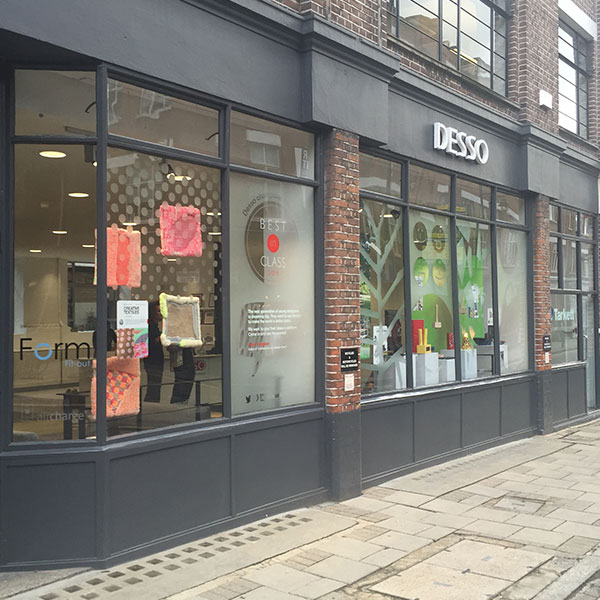

Clerkenwell contract carpet showroom Desso is showing Best In Class, a exhibition of the best design graduates of 2015, curated by confessions of a design geek editor Katie Treggiden, for the second consecutive year.

Katie selected the work of five designers or design teams from left to right: Will Yates-Johnson, Rob McIntyre who worked with Thor ter Kulve, Ted Wiles (all Royal College of Art graduates), Melanie Wood (Plymouth College of Art) and Wael Seaiby (Edinburgh College of Art) for its originality, creativity and contribution to society.

Melanie Wood’s Colour Block flooring collection is a range of textile squares created using vibrant screen prints which can be used for upholstery, wall hangings and of course flooring. The rugs are hand-tufted with pure untreated wool to give a luxury quality, and enhanced with highlights of neon wool. Her inspiration comes from artists like Matisse and aerial photography of water and islands.

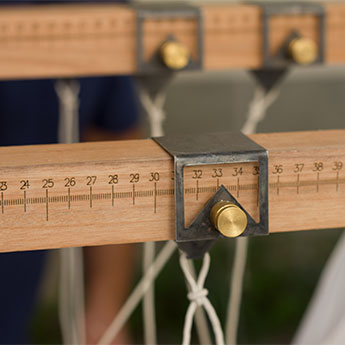
Thor ter Kulve and Rob McIntyre created a modular system of steps that can be attached, without tools, to form a spiral staircase around a tree trunk without causing any damage to the tree. The CanopyStair comprises a cast aluminium tripod frame, lightweight tread, handrail, and a ratchet strap that quickly fastens the steps into place. The duo wanted to unlock childhood memories of climbing trees and give people access to one of nature’s least explored ecosystems.

Reusing unwanted products to create material for new products, Will Yates-Johnson’s Polyspolia challenges how products are made and offers a responsible way of consuming. The project revolves around a colourful composite material invented from thermoset plastic resin mixed with wood flour and then powdered limestone. The material can be moulded easily into shape and at the end of its life, smashed into brittle pieces which are set within the same material to form a new products.

Plag by Wael Seaiby takes advantage of the free resource of plastic that carrier bags offer, aiming to reduce landfill and challenge the perception that recycled plastic is tasteless by delivering a collection of beautiful hand-worked vessels reminiscent of glass or ceramic craftsmanship.

A series of everyday household electronic items that require physical interaction, Ted Wiles’ range of consumer electronics requires the user to engage with them in a way that promotes wellbeing for them to work. These physical interactions create chemical changes within the user’s brain, to produce feelings of delight and happiness – for example a box-like bright yellow Victory Alarm Clock features two batons on the top that must be removed and held above the user’s head in a V shape to stop the alarm. This posture increases levels of testosterone and reduces levels of cortisol, making the user feel more confident and less stressed.

“The next generation of young designers are longer concerned with designing the next it-chair,” says curator Katie Treggiden. “They are dreaming bigger than that. They want to use design to make the world a better place. It was fantastic to be able to collaborate with Desso again this year to give their ideas a platform, to help them reach a wider audience.”
Further reading for the especially geeky:
- interview :: made by michael
- interview :: nordvink
- interview :: james molkenthin
- interview :: richard hardy