
This week, Benchmark‘s resident Fixpert, Maya Alvarado shares her FixFilms with the team at Benchmark; finds inspiration from Joanne, who paddled 715km down the Yukon River in Canada despite having been born without any fingers on her left hand; and goes back to visit Mrs Ellis to make some final tweaks to her Food Tray…
06:20: I wake up and get ready for work in extra layers today, as it is feeling frosty.
07:30: When I arrive at work I prepare the Tea Room for the screening of my FixFilms to the Benchmark community. Many of the team here have seen glimpses of the projects as I made them in the workshop, but today will be the first time they see the full story of how they developed with each Fix Partner. I hang a large roll of photographic paper and set up the projector. The remaining pieces of the black upholstery lining that I used for my baby carrier prototype are perfect for blacking out the windows.

10:00: All ready to go with the films, I wait for everyone to grab a seat. I feel a bit nervous, but very excited to hear their feedback. The running order is ‘Heidi’s Utensils’, ‘Fridge Fix’, then ‘Food Tray’ for Mrs Ellis. After the films finish Kevin from the workshop makes some really nice comments and is pleased to see the whole process through each prototype. It is great to get a dialogue going about how these projects sit running alongside the making of Benchmark’s furniture. Coming from Kingston University’s experimental workshop, I am used to designing as I make, testing whether things work or not as I go. I think that this suits the nature of the Fixperts process, developing each idea with the Fix Partner. The workshop at Benchmark is always prototyping new designs, but is also crafting beautifully refined products at the end of their design process. I think the two uses of the workshop sit really well together, with lots of learning always occurring. As I learn intelligent ways of making things from the team around me, I am exposed to a really high level of quality – which makes me want to produce each Fix in the best possible way. I think that my Fixperts projects also add a new element to the workshop; as people ask questions and share values they are considering new social issues in their day.

10:10: I have been editing different clips of the Benchmark teams’ canoe trips. They made their own canoes in the workshop and have had lots of adventures. This is the preview of their film and a nice surprise for them. Max asks me if we can continue to make films as they gather more clips. It will be nice to have each trip documented in a series.

10:30: Both the canoe film and seeing Heidi on screen, gets Mike thinking about our project with Heidi. We have a date now in place for our first paddle testing session on the guys’ canoes and with Heidi and her mum. Mike has the great idea of connecting three canoes together as a catamaran. This will give more stability to the canoe, which will be safer when testing different lengths of paddle.
 11:00: I receive an email from canoeist Joanne, whom James Carrigan from Sugru put me into contact with. She took part in the 715km long Yukon River Quest in Canada with an adapted paddle that she designed using Sugru to ergonomically fit her left hand that has no fingers. She is writing to offer advice and tips for our paddle project with Heidi. Her story is so inspiring and I can’t wait to show Heidi Joanne’s film. She shares a really important point that it is difficult to paddle for long stretches with one arm without switching. Our previous plans to strap a paddle to Heidi’s arms for one-arm use may have to include an ambidextrous tool, but this will be determined by how Heidi paddles and I am keen not to preempt solutions.
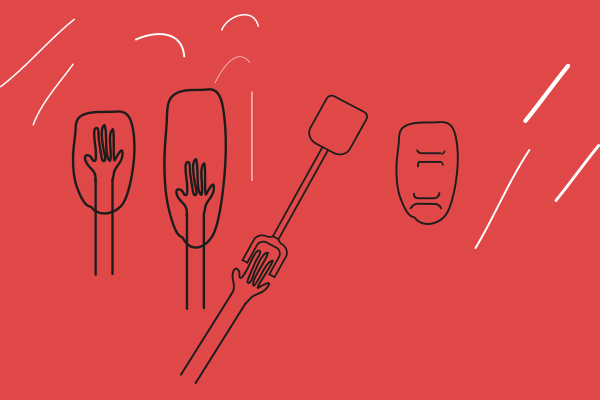
13:00: At lunch I speak with Colin, Mickey, Mike and Rob about the FixFilms. We talk about the development of Heidi’s utensils and how to find FixPartners. The last time I met Daniel we spoke about the process of idea harvesting. Now that the projects are complete at this stage, it is useful to reflect on what is valuable and successful in each idea; perhaps the material, or the concept. Then it is possible to determine what should develop for the next generation of product. Heidi’s utensils are strong in their material of formed veneers, but the most important factor is their shape. They could very well be made of a bioplastic and still perform as successfully, if not more successfully. Colin suggests that the handles could also function well as gardening tools.
13:30: After lunch I contact more charities and individuals in the hope of finding parents of young twins. Unfortunately because of confidentiality many organisations are not able to share information on their clients, which is completely understandable, but provides a scenario where it is hard to tap into possible Fix Partners. When possible I share my details to be passed on. I find a local group of parents of multiples that meet every month. Their next meeting is on Tuesday, so I will go along and see if I can meet a Fix Partner! As I mentioned last week, it is interesting to measure how successful it is to go through larger organisations. The fact that they will then act as a mediator between the Fixpert and the Fix Partner means that there is an element of waiting, rather than directly approaching people themselves.

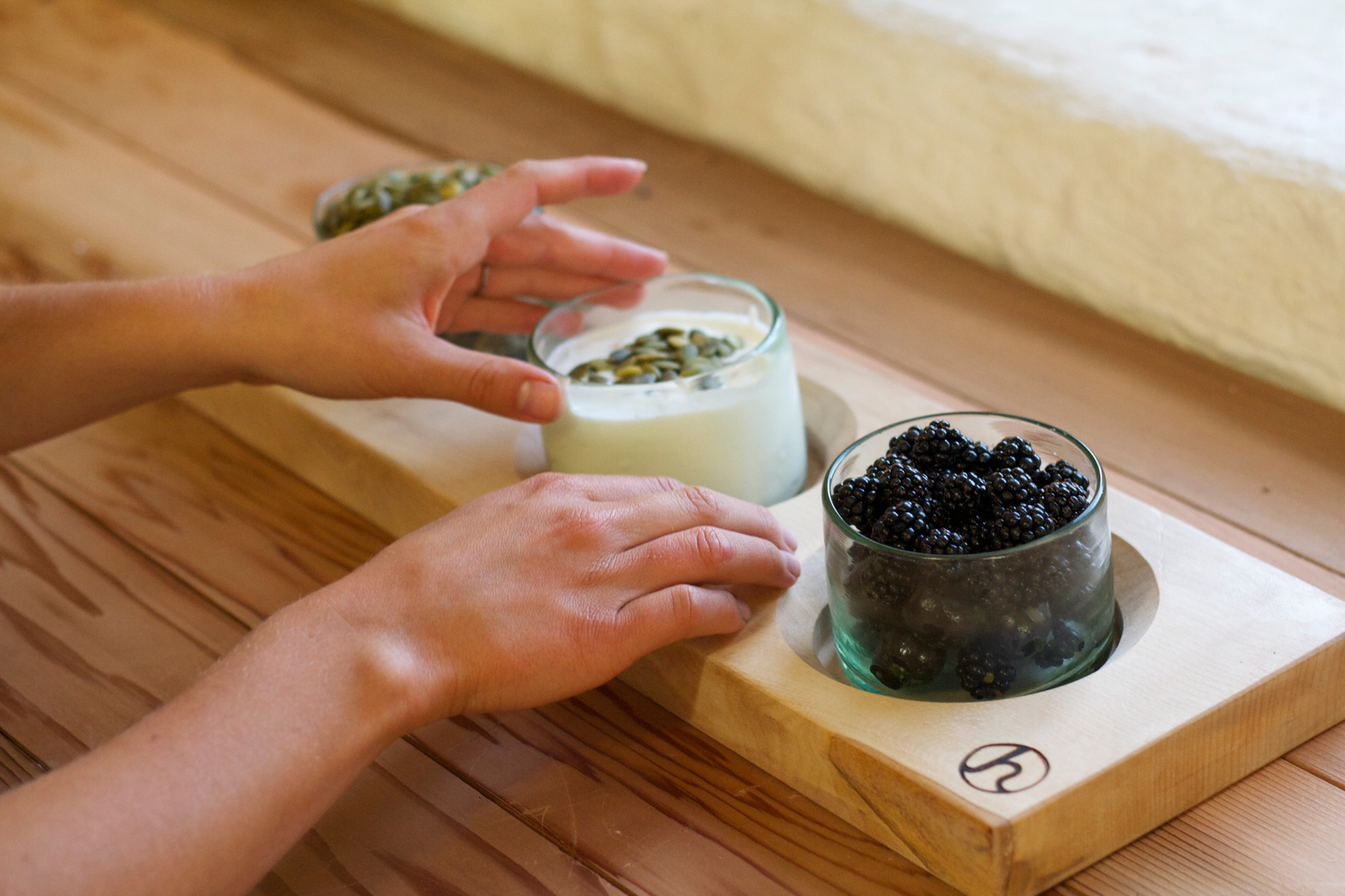
15:30: I visit Mrs Ellis and Mireya. The Food Tray is working really well, but I want to change over the type of clip that secures it to the walker frame. The previous types were raw steel and can scratch the frame, so I have brought along open terry clips that do not kiss shut when secured. These work a lot better, but are a snug fit and prevent the tray from lifting off easily for removal. A U-section might be a better replacement, so I will visit a plumbing shop and return with some alternatives.

17:00 I return to Benchmark and drop off my drill and camera, which I used at Mrs Ellis’s. I check the new uploads on Fixperts.org and I watch ‘Smart SmartPhone cover for Nir’ by Fixperts Shir Avraham and Chen Bogin. The projects from the Holon Institute of Technology are always some of my favourites. Their solutions often tackle everyday tasks that are frustrating not to be able to do or to complete with difficulty. The innovation here enables Nir, with prosthetic hands and a visual impairment, to successfully use his smartphone, where previous attempts resulted in difficulty lifting the phone, breaking of the screen and an inability to access its functionality. Simple additions of a cover, hook, buttons and a slider make it possible for Nir to hook the phone’s casing on his prosthesis, to activate voice recognition software and to grip the phone for use.
17:30: On my way out, I look at the beautiful sky with Drew from Benchmark. It’s so lovely having longer daylight hours – it makes it possible to catch such gorgeous colours in the evenings.

Further reading for the especially geeky:
- A day in the life of the Benchmark Fixperts Resident – Week 21
- A day in the life of the Benchmark Fixperts Resident – Week 20
- A day in the life of the Benchmark Fixperts Resident – Week 19
- A day in the life of the Benchmark Fixperts Resident – Week 18