
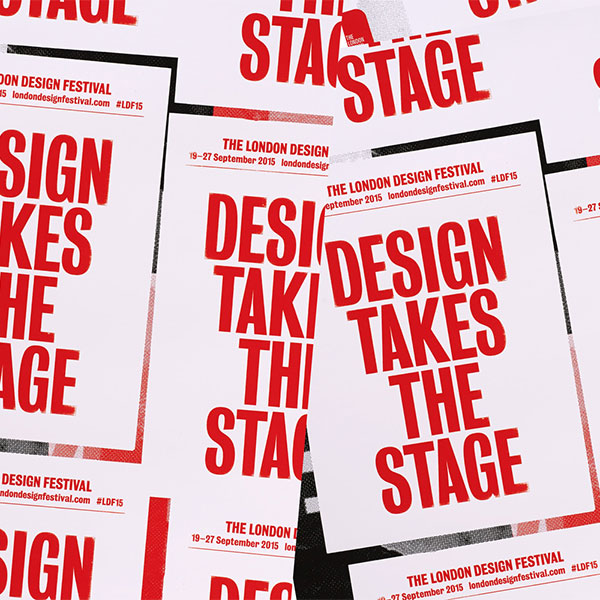

The London Design Festival has been and gone for another year. If you want all the gory details, you’ll have to subscribe to our sister publication Fiera Magazine, but you’re in the right place for the edited highlights. Here are just a few of the fantastic projects I saw across the capital this year…

From top to bottom, left to right:
- 19 Greek Street was one of the absolute highlights of the London Design Festival for me this year. An absolute antidote to the “new for the sake of new” overwhelm that can sometimes strike you on the fifth consecutive day of walking up and down and up and down trade show stand after trade show stand. Curated by Marc Peridis around the question, ‘How can each of us change the world?,’ the five floors of this Soho townhouse were filled with spaces that really made you think. All the windows had been replaced with The Current Window by Marjan Van Aubel for Caventou, a stained glass window that captures solar power and converts it into electricity. The table in the foreground,made of reclaimed wood and thin copper tubes, is part of Lionel Jadot‘s debut collection.
- I loved the second floor – styled as a complete studio apartment to set some of the exhibits in a domestic context. The bed-frame and bedside table by Paratelier are made from Doka, a light and resistant prefabricated formwork, normally used in concrete pouring. Even the phone is not just styling, but by Fairphone – a social enterprise founded to develop a smartphone with “minimal harm to people and planet”. The Vegetable Light is typical Peter Marigold – a portable table lamp using a large heavy vegetable as a base. And the Nevern mattress from Abaca is made from organic wool and mohair encased in an organic cotton cover – without any metal springs.
- The top floor might have been my favourite space of the week! A light-filled dedicated mediation and wellness room offered a moment for peace and reflection amid the chaos outside. The Art of Progress was one of the most thoughtful and thought-provoking exhibitions at the London Design Festival and a worthwhile reminder of the power of design – in the right hands.
- 100{ff546b69e23b1524d799f96c6ba7a638e1f677053b0a2a1568b05315fd5f8fc7} Norway is always a highlight of the festival and this year was even more of a treat than usual. Norwegian Icons co-curated the exhibition, and included mid-century pieces as part of their mission to put Norwegian design on the map alongside their Swedish and Danish counterparts. The discovery of oil off Norway in the 1960s meant design took a back seat and classics like Birger Dahl’s 1952 Birdy lamp and Hermann Bongard’s 1961 Plus table were overlooked. “You always have this urge to expand your knowledge, to discover something new – and suddenly we can present a whole beautiful package of unknown designers and objects,” says co-curater Einar Kleppe Holthe. “It’s like holding a box of candy.”
- I was lucky enough to visit Norway’s Hadeland Glasswerk as part of the 100{ff546b69e23b1524d799f96c6ba7a638e1f677053b0a2a1568b05315fd5f8fc7} Norway preview and watch this stunning centrepiece by Maud Gjeruldsen Bugge being made. Maud has worked with Hadeland since she graduated from Oslo National Academy of Art and Design in 1989.
- My favourite 100{ff546b69e23b1524d799f96c6ba7a638e1f677053b0a2a1568b05315fd5f8fc7} Norway project was Solberg Weave by günzler.polmar in collaboration with Solberg Spinderi, a 185-year-old textile manufacturer in Oslo. Looking for a contemporary and commercial application for the fantastic range of colours and patterns in the archive, but restricted by the pre-set width of a roll, the design duo have created a pattern that can be cut in half, and in half again, ad infinitum, creating a range of products from bedspreads to tea-towels.
- Over on the other side of town at 100{ff546b69e23b1524d799f96c6ba7a638e1f677053b0a2a1568b05315fd5f8fc7} Design, celebrating its 21st anniversary is new venue London Olympia, Þórunn Hannesdóttir’s Berg tables appeared as part of Icelandic design collective North Limited. They comprise thin steel bases and cast aluminium and concrete tops – inspired by the dramatic landscape of her home country. I’ve got everything crossed I can get over to DesignMarch 2016 to see more Icelandic design for myself.
- It was wonderful to see The Invisible Store of Happiness again having worked with the team on a series of essays documenting its design and manufacture. Furniture designer Sebastian Cox and sculptor Laura Ellen Bacon worked with the American Hardwood Export Council (AHEC) on the piece, conceived to highlight under-appreciated hardwoods maple and cherry, and spark a discussion about carbon usage.
- Cornish designer Tom Raffield was on fine form with an extended collection of his steam-bent furniture and accessories.
- The “hub” for LDF was once again the V&A. My favourite installations there are those that go beyond simply using the V&A as inspiration or even a backdrop, and encourage visitors to engage with the musuem more. The Cloakroom by Faye Toogood encouraged visitors to borrow one of 150 compressed foam Kvadrat coats, each of which had a hand illustrated map sewn into the pocket. The map led visitors to a series of handmade coats which reflected their surroundings, for example the Stone Mason made from marble (reflecting the V&A’s lobby) and the Wood Carver, hand-carved from wood (matching the wooden panelling in the 16th century gallery). “I want to take people on a journey of discovery through the depths of the Museum, said Faye.”
- Laetitia de Allegri and Matteo Fogale’s Mise-en-Abyme (literally ‘placed into abyss’) comprised a series of coloured acrylic panels over a bridge with ever decreasing gaps to walk through, the smallest of which required you to stoop.
- The Tower of Babel by Barnaby Barford comprised 3,000 unique bone china shops stacked in order of value from derelict buildings at the bottom to exclusive boutiques at the top, each of which is for sale. “This is holding a mirror up to London. It is a critique on a city which has some of the world’s richest people and definitely the country’s poorest people, and a critique on endless consumption and whether the constant quest for economic growth is sustainable,” said Barford. “But at the same time, London is an amazing city built on trade, and this is a celebration of that.”
- Curiosity Cloud by mischer’traxler was 250 mouth-blown glass globes filled with hand-fabricated insects from 25extinct, common and newly discovered species. From a distance, the insects are still, but as you approach, sensors set the insects into motion – the sound as they crash against the glass walls of their tiny worlds is almost deafening.
- The Ace Hotel in London’s Shoreditch collaborated with Modern Design Review founder and editor Laura Houseley to commission a collection of objects as an exhibition for the London Design Festival, but crucially, that would be used by the hotel afterwards. “Ace Hotel gave me a list of everything they needed, I cherry-picked a diverse selection of objects that I thought would be interesting design exercises from a door handle to an art installation, then set about finding designers to make those objects,” said Houseley. The objects included Tomás Alonso‘s pressed metal Spin ashtray. “The idea is that it rotates gently, so it’s a playful thing to have between two people,” said Housely. “We wanted an intimate object that one person can carry with them. They also stack beautifully.”
- Another object was Malouin’s stacking stool, which can also be used as a side table and was designed for the hotel’s lobby, a popular working space during the day and cocktail bar at night. “The use of natural wood is actually quite new for the Ace Hotel, so they add little punctuation marks in the space,” said Houseley.
- I somehow managed to spend 10 hours at Tent London! Certainly, too much gassing, but there was also a lot of really great work to see. The fabric design above is by Jonna Saarinen and was part of LDF’s first Finnish pavilion.
- I actually worked with Plymouth College of Art to curate their stand for Tent, so I was really pleased to see it looking so good! They had a really strong collection of graduate work including projects by Melanie Wood, Julian Jay Roux and Jenny Jefferies.
- I am a big fan of Ted Jefferis aka TedWood, a young designer/maker who recently won an Elle Decoration British Design Award for his work with wood, and I loved these new almost anthropomorphic side tables.
- Sue Pryke’s collections just get better and better every year. Last year she started collaborating with husband John of Wild + Wood for the first time to combine ceramics with wood for the Mr & Mrs range. This year she’s introduced ceramic teaspoons and added metal into the mix with stunning results.
- The Gathering Collection by Saniyo was inspired by bringing loved ones together. “In this world of 6.5 billion inhabitants, what explains that some people are your family and friends while some people are just passers-by in your life?,” they ask, inviting you to use this ‘partyware’ collection to celebrate the people you love, and take a moment to be grateful that they’re not among the passers-by.
- I really liked Kate Farley’s Construct collection, a surface pattern inspired by the woven fabric. She worked with SurfaceView and Formica to extend the collection beyond her usual fabric and paper products, and her new colour palette is fabulous.
- Somerset House was a new venue for LDF this year and one of the key exhibitions was 10 Designers in the West Wing – an opportunity for well-known designers to work with one of their favourite clients to create something for the festival. Patternity collaborated with Paperless Post to create an immersive experience to celebrate their limited edition of graphic, monochromatic greetings cards – they filled a room with the patterns used in the collection, inviting people to “explore, play and connect with each other in the real world.”
- Another installation was Powered by Tweets, a showcase of responses to a call for ideas that solved a problem or created something beautiful using Twitter. My favorite was #PutRedBack by WERSM. The windows of the Terrace Rooms had been filled with all the colors of the rainbow apart from red. Each tweet in protest to a UK law that requires gay men to abstain from sex for twelve months before being allowed to give blood (straight men can give blood even if they’ve had unprotected sex in that time period), added a drop of red to the final window, slowly completing the rainbow. A visually impactful way to raise awareness of a discriminatory law.
- Spine was an installation comprising motion-sensitive clusters of Plumen lightbulbs suspended in a stairwell, whose brightness followed visitors up and down the stairs. “It highlights the idea that electricity carries our intention and thought into action both around us and within us.” said designer Nassia Inglessis. “We all know that externally we have man-made lighting that fuels our activity all hours of the day, but we forget that electrical signals also exist in our body and create our thoughts and turn our thoughts into actions through synapses across our spine.”
- 2015 confessions of a design geek bursary winner Alicja Patanowska was showing new work with the Contemporary Polish Ceramic Design stand – an incredible testament to the country’s skill in that medium. HerbLab and MushroomLab are tabletop greenhouse systems for growing herbs and mushrooms in the home.
- Over at Home London, actually sneaking in just before LDF started, I absolutely loved Margo Selby’s new bed linen and throws in an incredible neon colourway. The picture doesn’t quite do it justice.
- We also launched the 2016 confessions of a design geek bursary with work by Alicja Patanowska and 2014 winner Fanny Shorter. One new designer stands to win a bursary worth over £10K, so if you’re in your first three years of a creative business and make your products in the UK, apply here.
- Also at Home, Linda Bloomfield created her newest collection by making the pots depicted in Giorgio Morandi’s still life paintings. The mid-century colour palette and textured surfaces mark an exciting departure from her previous work.
- designjunction was split across two venues this year. At Victoria House, Bath Spa graduate Emma Buckley was showing the Dye Lines collection, her graduate project. The pieces are fully glazed apart from a tiny hole in the base, through which ink and bleach are absorbed, directly colouring the clay.
- London design brand Tiipoi have moved on from their copper and brass roots and are embracing powder-coated spun aluminium in a big way. Having been a very big fan of their debut collection which played upon the value of ubiquitous Indian tableware, I was hesitant about this new direction, but having seen it in the flesh, I have to confess, I like it.
- Having focused on the craft world for most of her career, Scottish ceramics designer Lara Scobie was showing at a design show for the first time – all I can say is craft’s loss is our gain. I absolutely love her work and hope to see a lot more of it.
- While at The College (the former Central Saint Martin’s building) The Play Collection by Royal College of Art graduate Stephen Johnson is made from a synthetic dough the designer invented while on medication following a breakdown. He wanted to go back to basics and reconnect with the fun and freedom we have as children. As well as its aesthetic qualities, the dough enables furniture to be constructed without traditional joints. I absolutely love the neon colours and playful forms.
- I really liked James Stickley’s Stühl Series in his trademark ‘graphic minimal’ style and powder-coated in azure blue. His background in television set design drove his desire to create something more enduring, and a career change to furniture design. I suspect these are going to be around for a while.
- Tom Pigeon were showing their own newest collection, and also a new range called Sourced, beautifully designed items made by craftspeople local to their studio on the East coast of Scotland.
- citizenM collaborated with Danish stylist and art director Nathalie Schwer to create a secret garden inspired by the famous Alice in Wonderland quote, “Imagination is the only weapon in the war against reality.” Nathalie has divided the space, usually a haven for late night smokers, with brightly coloured panels, creating a mini-labyrinth filled with floral displays.
- And finally, I couldn’t resist including HAM’s DJ bunny, the perfect motif for the party atmosphere evident across London throughout the festival.
I had an absolute ball and saw so much amazing work. What are your favourites from the above – and what’s missing from my edit? Let me know in the comments section below. And don’t forget to sign-up for Fiera Magazine to make sure you’re among the first to receive Issue 03, which will have a much more detailed account of the London Design Festival, plus all my top finds from Dutch Design Week, Design Event Newcastle and Dubai Design Week.
Further reading for the especially geeky:
- interview :: made by michael
- interview :: nordvink
- interview :: james molkenthin
- interview :: richard hardy

Product images: Nancy Bundt. Team and founders image: Veronica Mike Solheim


Hi Excellent list. Wasn’t able to make it over last year, so great to see such a comprehensive selection. Thanks