
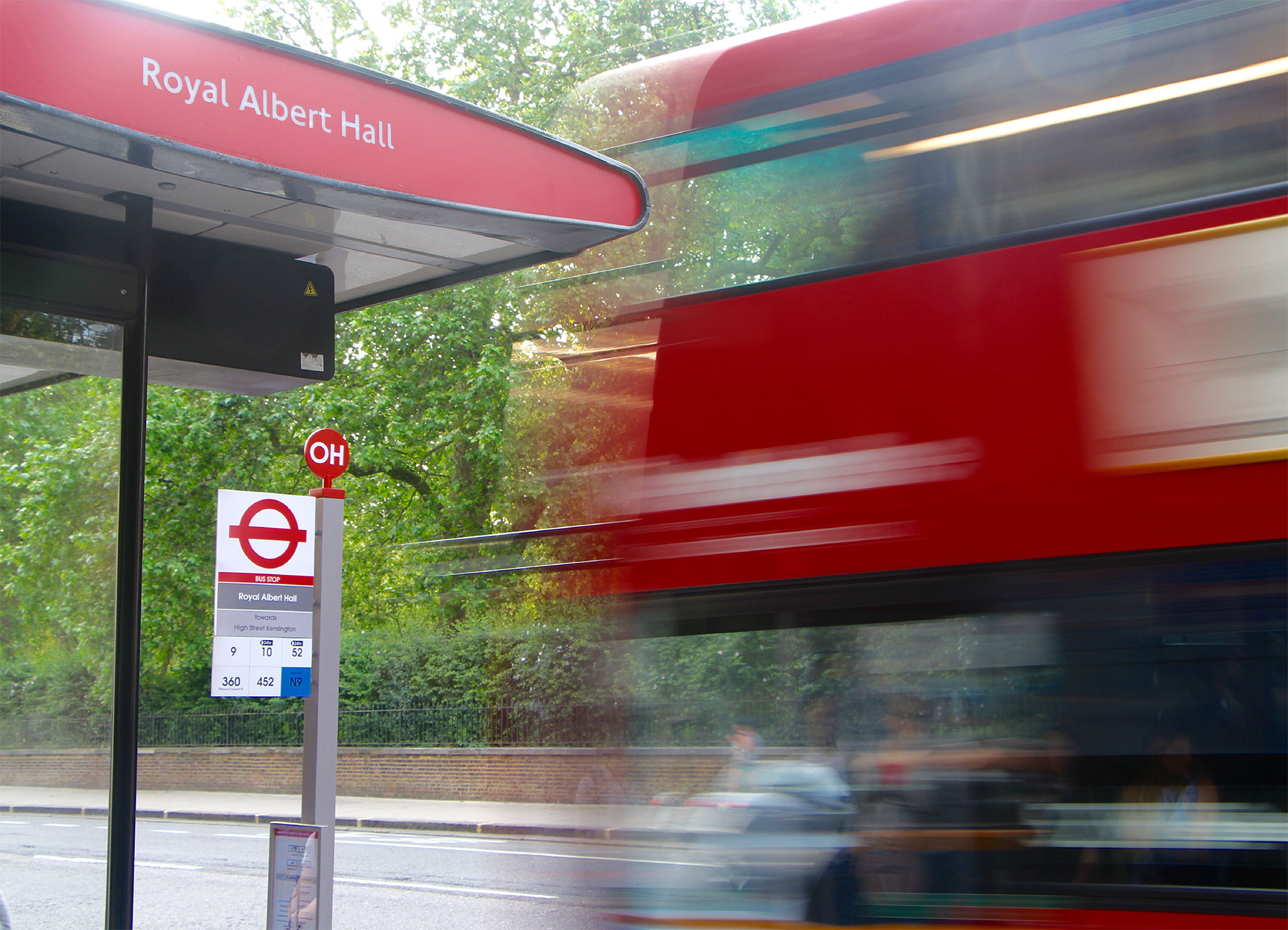
Almost two million people in the UK, and one in five people over the age of 75, are living with significant sight loss – more have low or partial sight. Often unable to drive, many of these people are utterly reliant on public transport. A survey in 2014 found that just 41{ff546b69e23b1524d799f96c6ba7a638e1f677053b0a2a1568b05315fd5f8fc7} of visually impaired people found bus drivers to be “quite reliable” and half say they regularly miss buses, with ‘stacking’ buses, buses failing to stop, and inconsistency between services all cited as issues. Only 12{ff546b69e23b1524d799f96c6ba7a638e1f677053b0a2a1568b05315fd5f8fc7} are using bus apps on their smartphones, so Olivia Hildebrand set about designing a more physical in-situ solution as part of her graduate project.

Her solution is Tact – a modular guidance system primarily designed for people with visually impairments, but also for people living with other disabilities, to help both groups gain confidence in using London buses.
Passengers can press the button for the bus they’d like to catch – using braille if necessary – to alert the nearest driver, enabling him or her to stop safely and ask existing passengers to ensure a priority seat is free. When the bus approaches the stop, an audio announcement will alert the waiting passenger of its arrival.
“This inclusive service design is looking to disrupt the existing bus system, while improving the current bus structure,” says Olivia. “Driven by simplicity and independence, Tact aims to create the freedom of navigating the problematic London infrastructure for users with disabilities. Because of its straightforwardness, Tact could easily be added to the existing bus infrastructure immediately, with the end goal of improving everybody’s experience.”
Her research found that it wasn’t just the bus service itself causing problems. “Someone pushed me with her baby buggy because I wasn’t quick enough to get in the bus and I fell. She used my back as a ramp for the buggy,” says Amit – one of the people she interviewed. “Every journey is difficult and the lack of education and information people have make the journeys even harder,” adds Rose – another interviewee. Olivia hopes that making the bus service more user-friendly for everyone would help people with disabilities to avoid some of these unpleasant confrontations.