
Born to artistic parents, Tove’s first illustrations were published when she was just 14 years old. “I’m working” was a phrase that cropped up frequently in her diaries, even at this young age – and referred to anything from drawing to actively seeking ideas. She studied at Stockholm’s University College of Arts, Crafts and Design, the Graphic School of the Finnish Academy of Fine Arts and at L’École d’Adrien Holy and L’École des Beaux-Arts in Paris, and was primarily a fine artist. Despite the success of the Moomins books, the first of which was published in 1945 as an antidote to the second world war, what she really wanted was to be taken seriously for her painting.

She started renting this space shortly after the war and eventually bought it once the Moomins started generating sufficient income. “It looks terrible after the bombings, no windows, cracks everywhere, large pieces of the walls have collapsed, the stove and the radiators are destroyed,” she said in a letter to Eva Konikoff in 1944. “But it is still my great dream, 7.70 metres from corner to corner. And next to it is a small room where I can live.”

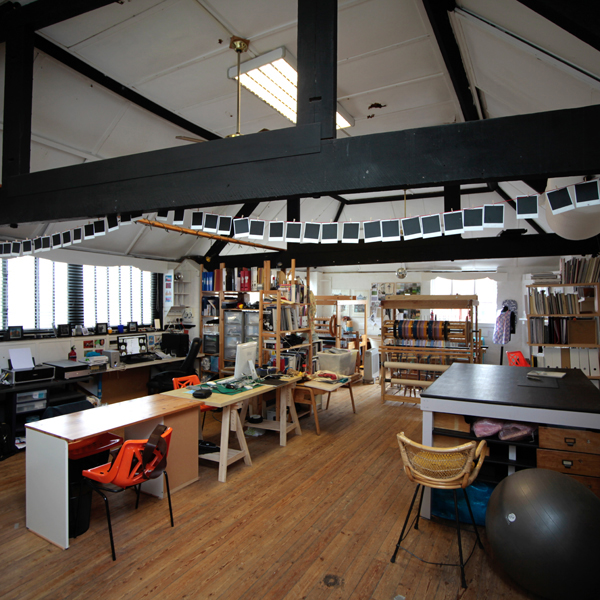
The “small room” that comprised her living accommodation was modest to say the least, with most of the space given over to creating, storing and displaying her artwork. A small fire provided heating for the whole space as well as somewhere to cook. She had a tiny living room and slept on the mezzanine level (added later) with a view over the studio and crucially, of the sea. One indulgence she did insist on was a blue bath – quite a luxury at the time.

Tove’s lifelong partner Tuulikki Pietilä, a graphic artist and professor whom she met in Paris, had a studio in the same building. The two were connected via an attic passage and although the pair never lived together, they would visit each other through this passage, which also served as storage space for paintings by both women, in some ways becoming a secret gallery.

She received the Hans Christian Andersen Award for Writing for her “lasting contribution to children’s literature” in 1966, but eventually tired of the Moomins and convinced her father, who was a sculptor, to take over from her.

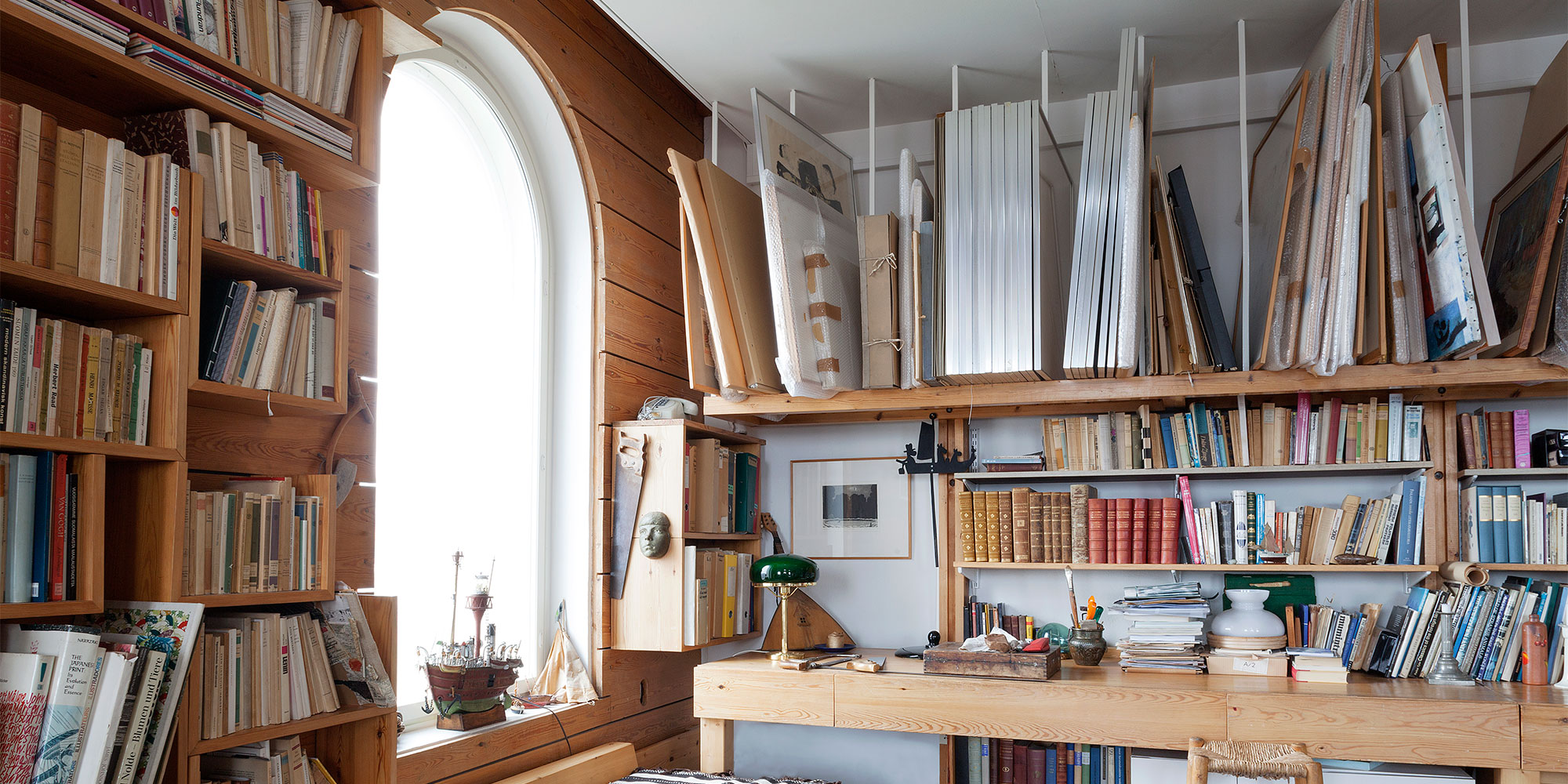
Such was her love of books that she boarded up one of three windows on the wall above to create more space for bookshelves.

Built-in seating provided cosy corners to sit and reflect and the objects Tove collected for inspiration still fill the windowsills to this day. She and Tuulikki spent their summers on Klovharu island in Pellinki, which provided respite from the city and the inspiration for much of her work.

In 1972, she was offered a place at the Porvoo Poet’s Home, which she turned down, despite admitting that it was the greatest honour that a Swedish-speaking author could receive in Finland. Preferring the peace and solitude of her beloved studio, she lived and worked there until she died in 2001. Apart from necessary repairs, her family has left the space as it was then.